Comprehensive primary care and social participation in healthcare: the Costa Rican and Nicaraguan experiences
When ?Dengue is just a bad cold
Short hiatus to the writing as dose of man-flu last night - aches, tiredness, etc - got mistaken by yours truly as an early case of the dreaded Dengue, currently rife in the Argintinean capital. Some paracetamol, coffee and a swim and a swift dose of self-talking-to and am trying to get back into swing of the conference. Even doctors shouldn’t Google their symptoms huh.
Handily, alongside these blogs looking to examples across Latin America for public health and primary care reform, British Medical Journal Collections Editor Richard Hurley just happens to be at the Assembly leading a workshop on what lessons we could take from health systems in South America and elsewhere, this very afternoon.
Costa Rica and integrated primary care
To wrap up this short blog series then, let’s take a look at Costa Rica. Land of “El grano de oro” - the golden grain (coffee - which fueled much of the country’s early development), the densest biodiversity on the planet, and apparently the world’s happiest people for 4 years running. The country is very much a middle-income country, distinguishing it from the contexts we’ve looked at up until now.
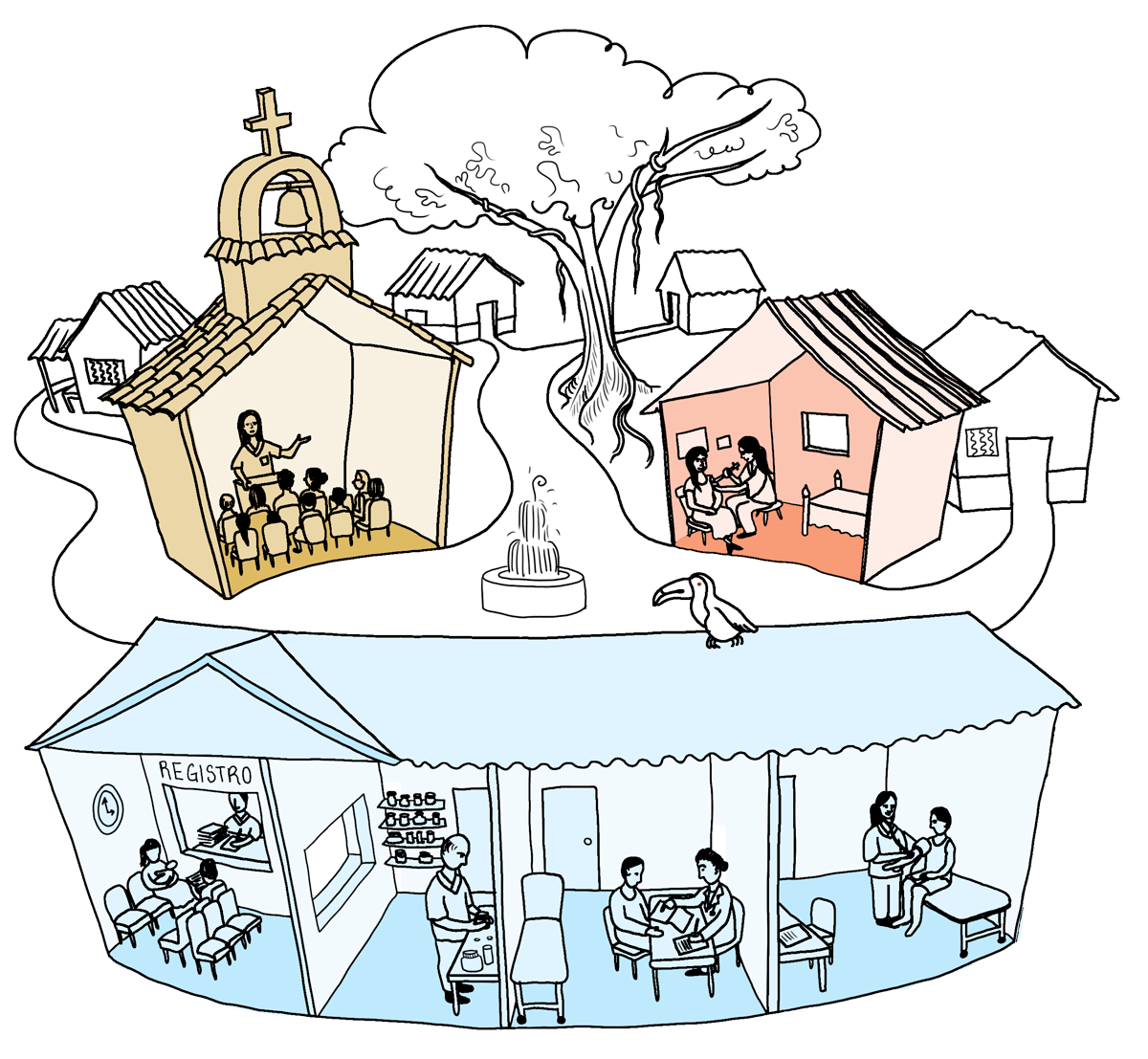
Costa Rica developed a programme of integrated primary care teams, Equipo basico de atencion integral de salud (EBAIS) in the mid ’90s. Until then citizens were accustomed to receiving healthcare in hospital settings, so viewed the centres and teams with some suspicion. EBAIS teams involved a doctor, nurse, administrative officer and a pharamcist, each serving around 4500 people. Similar to the examples we’ve looked at so far, a strong focus was placed on proactive outreach, with teams collecting data on people, sharing this with the regional health authority, with scrutiny of performance, and adjustmentents to resource allocation where needed.
EBAIS teams included an asistente tecnico en atencion primaria - a role similar to the community health workers used in other countries - with the aim of visiting households at least annually, but with further visits scheduled depending on risk stratification and need. As well as an integrated digital care record, the teams now routinely use mobile tablet devices for data collection, both in rural and urban settings.
 *from commonwealthfund.org*
Because the EBAIS programme was rolled out gradually, starting in the areas in greatest need, several authors were recently able to evaluate its impact in a time-series analysis, published earlier this year. 9 years after EBAIS teams and their related primary care centres opened, there was a 13% reduction in mortality in the area, highest among adults over 65 from chronic conditions, including cardiovascular disease. The study showed furthermore increased in service utilisation in primary care, reductions in emergency department usage, likely consequent to the proportion of care being delivered in primary care (by 2019, community health services comprised around 75% of outpatient contacts across the health system) and increased investment (65% of overall outpatient spending, and 20% of entire health budget by 2019).
Community participation in health - the Brigadistas in Nicaragua
Exporting lessons for public health from Nicaragua may seem somewhat circumspect right now - given the country has some of worst data transparency for COVID-related deaths in Latin America, and with recent reports of human rights abuses against health professionals for speaking out against the government. Efforts though since 1981 to increase public participation in the health system and primary care through the Brigadista network seem ripe for learning from however - with the country a great example among the many across Latin America where government and services has recognised the critical need to mobilise and engage with communities, transitioning away from their passive role as patients in receipt of services.
Publications from Nicaragua, particularly more recent ones, centred on the Brigadistas are hard to come by. Possibly owing to recent turbulence in the country and its health system as implied above. An article in Social Science and Medicine from 1985 attempts to summarise the vision and activities of Brigadistas de Salud. Like Cuba, these voluntary networks served twin purposes, both social to improve the conditions of local communities, but also to coordinate logistics in the event of a military incursion, an event which Nicaragua post-revolution saw not infrequently from armed guerillas. Brigadistas aimed partly to mitigate the lack of trained health professionals in an area, providing basic curative and preventive care. The aim was also to use such local health activists to increase participation in decision-making - though as this article demonstrates, that has been more challenging. More recent analyses, including this article in the Lancet in 2018, suggests the role has been subverted somewhat towards political agendas of the administration. Perhaps this isn’t the best shining example then, but we can hardly have community-orientated services without the participation of the community now, can we? I’d argue then there has to be a way of cracking this, not necessarily through social movements and campaigns at a national level, but at a community, service by service level, ensuring the scrutiny needed.
Summing up and bringing this back to the UK
Bringing this back to thinking about the UK then. We have a number of countries, all a fraction as wealthy as the UK, with quality in healthcare delivery and life expectancy competing pretty favourably with the UK and other high-income countries. Each country has invested in its healthcare system, most particularly primary care, but often with parallel programmes to make sure other social determinants of health receive attention. While we may have admirable infrastructure for primary care, it’s clear the workforce these countries, which have made huge inroads in preventing, identifying and managing both acute, but also chronic diseases, has been grown with deliberate intent to transfer resources and care delivery from hospitals to communities. Integration of local services has been key, with a focus on more proactive care - often achieved through the work of community health workers, who seek out unmet need far earlier than we might see in the UK. Mobilisation of communities has been critical in certain activities, for example vaccination and health promotion campaigns, but was also conceived as key to incorporating communities at the heart of decisions regarding the planning and delivery of services.
Some, OK much, of this isn’t at the discretion of local services. It needs systematic, sustained investment and attention by government. In a democratic nation, as we wants all countries to be, it obviously also needs the mobilisation of civil society, to shift the policy environment away from our current care and public health models towards this direction. It’s likely there are many who benefit from health and service delivery as it exists, so you’d expect more than a little clamour of protest to go in this direction. Perhaps even from the professions.
But if the evidence coming from these countries is worth anything and plausible - and the data, particularly from Costa Rica, seems compelling, as does the logic of the entire approach - it’s surely worth considering how these principles - shifting resource to community services, building an infrastructure of resourced, integrated, proactive services, supported by a network of community activists whose role is to scrutinise, challenge and promote community benefit - could be incorporated in health planning back in the UK?
Let me know what you think - drop me an e-mail, find us on social media, and let’s think how health and service delivery post-austerity could really look.
Jonny, Co-Director HCB Associates